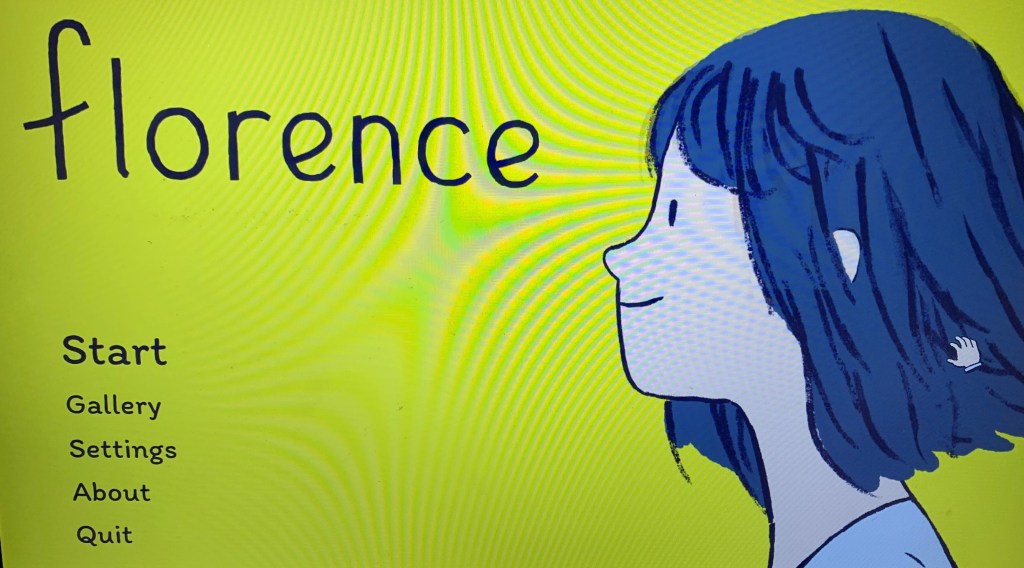
As my previous blog post mentioned I became so frustrated after working on the first step for over an hour on a video game that I gave up. The game was poorly designed in that I could not even figure out how to play the initial loading screen which was a sandbox. It was a poorly designed sandbox meant to teach the rules but instead it was a sandbox that was so confusing I had to give up. Not wanting to waste more time I decided to purchase a game in hopes that 5 dollars could guarantee a game that made a little bit more sense and was a little bit more user friendly. I discovered the game by doing a google search for story based games in hopes that I could use a the video game as a form of media literacy to teach elements of a story such as plot, dialogue, conflict, Freytag’s Pyramid etc. The google search led me to a game titled, Florence. The reviews for this game detailed exactly what I was looking for, “Though the game is only 30 minutes long, it has earned praise for its storytelling, character building, and art direction.” 30 minutes seemed like the perfect length for a classroom experience and I figured the students can benefit from exploring the concept of character development and archetypes through the game.
After playing this game, I discovered it had even more literary worth than I originally thought. Although there is virtually no dialogoue in the game it offered imagery rich in metaphors which advanced the plot. The aforementioned character development is also present while Florence attempts to navigate who she is and what she wants in life . The game was broken into chapters which made it feel even more like a traditional novel and would be useful in categorizing discussion questions.
The instructions in this game that were subtle and not textual but rather movement based. For example an object that the player is supposed to drag with the mouse will grow and shake to indicate that they should manipulate that object. Florence had its instructional beginnings in well-ordered problems which is a concept Gee described as problems which “are designed to lead players to form good guesses about how to proceed when they face harder problems later on in the game.” (Gee 35). For example, the game began with Florence waking up.

One of the first motions the players had to move through was brushing her teeth. There was a toothbrush highlighted and as soon as the player started moving the brush back and forth- the character on screen began brushing her teeth. This concept would come back later in the game by manipulating different objects by shaking them, moving them, or manipulating them in some way to make the character(s) on screen react.
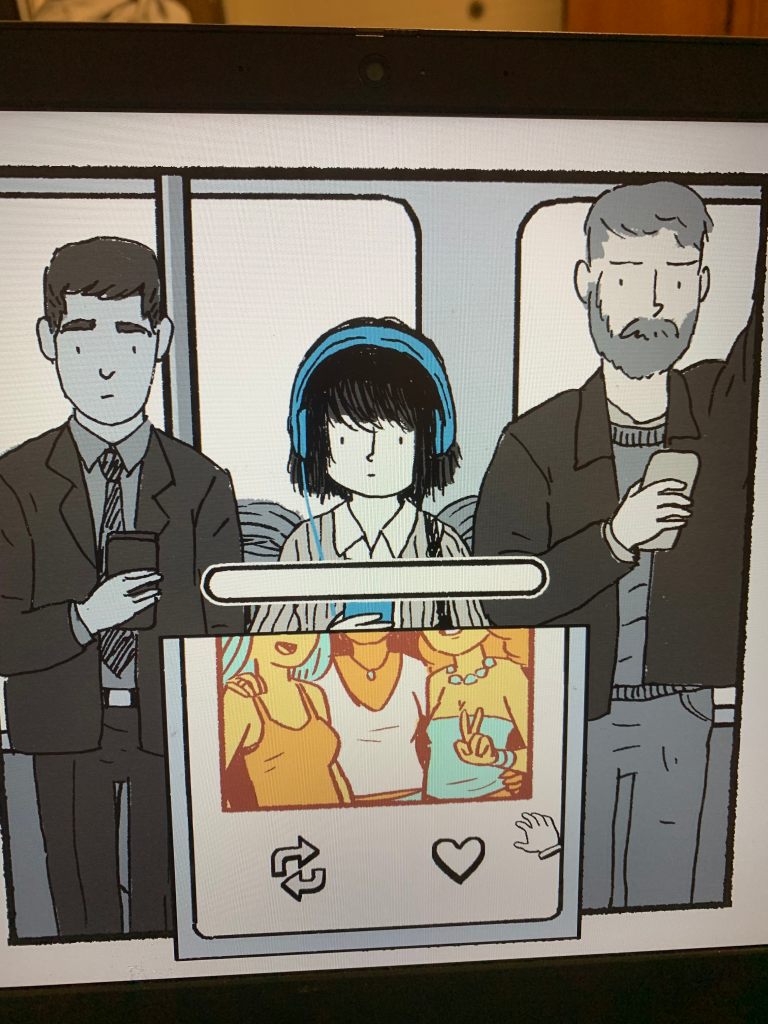
The game does not have much actual dialogue, the exception is when the character talks to her mom on the phone and can choose passive aggressive responses or passive responses.
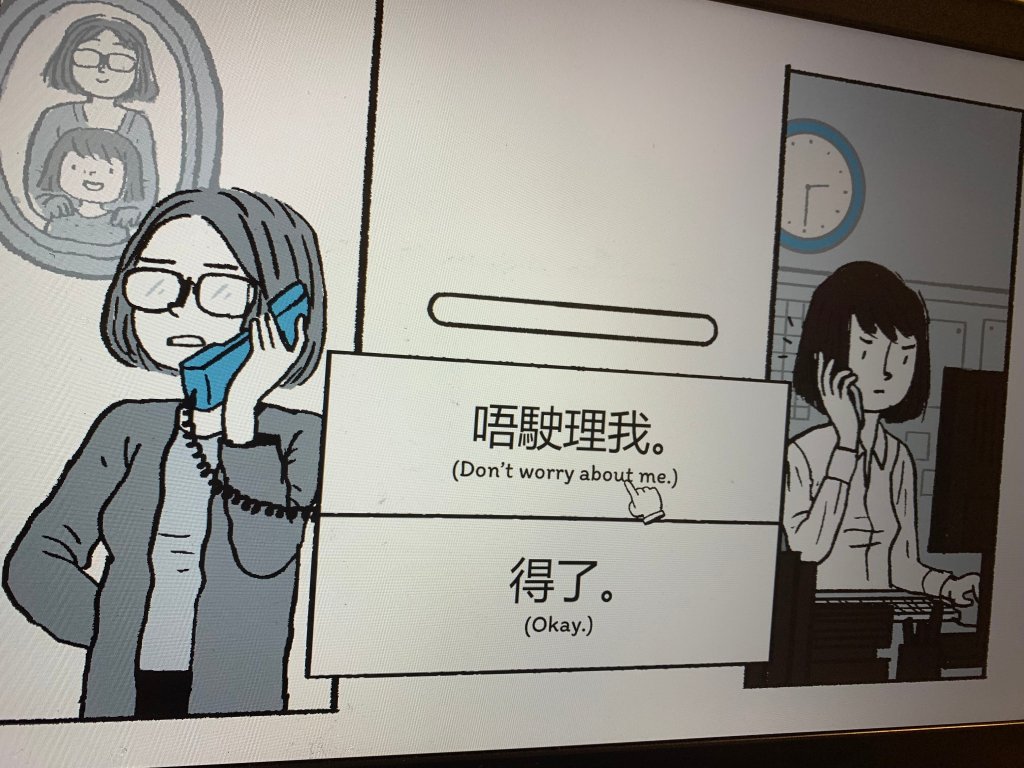
The player notices that Florence is not content with her current life as it is the same boring routine everyday. At this point I started to realize for the most part this game does not represent Gee’s concept of “Co-Design” exceptionally well. There is the element of allowing the player to do something and the game does something back, which encourages the player to make another move or do something in return. (Gee 30) However, as far as I could tell playing this game it had a predetermined plot so the players actions don’t influence the trajectory of the game.
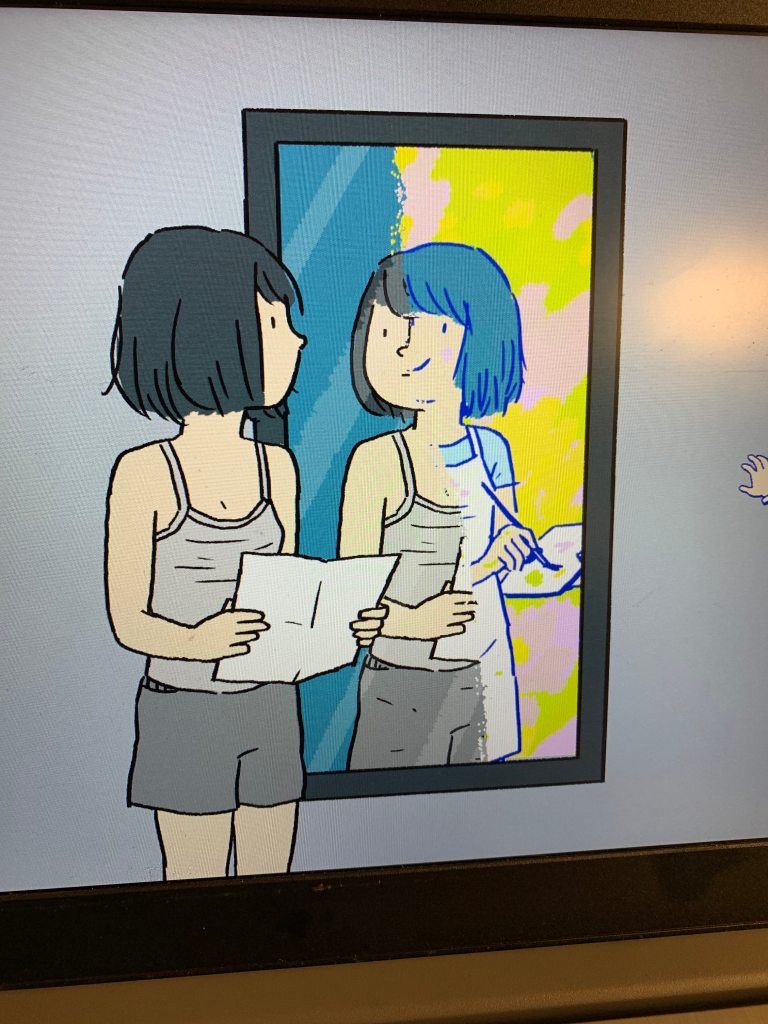
Squire notes that a prominent aspect of video gaming is the example of how “these spaces has been the way that they allow players to explore new identities, particularly ones where they inhabit worlds through different genders,” (Squire 23)Therefore, even though this game follows a female protagonist this does not mean it won’t be an engaging experience for male students. Furthermore, the protagonist of this game is Asian and her love interest is Indian. This experience allows students who are Asian or Indian to see themselves in the video game and for students who are not to take on a new identity through gaming. Their identities are not the primary focus of the game but they do have elements throughout such as the items found in their house, the pressure Florence feels on herself to succeed, and the food they eat.

This game is a safe space to experience a real world scenario that many adolescents may be struggling with. The protagonist of Florence goes through the motions of working as a data analyst, struggling between her dream job and boring work, navigating familial relationships, navigating her romantic relationship, and finding the joy in the world again. All of these topics are found to be intriguing by adolescents who are in a crucial stage of identity development and also beginning to be curious about romantic relationships. Florence is a sandbox where students can experience the real world through a safe world (Gee 39). The game itself although sad at times is comforting with soothing music and entrancing artwork.

Overall, I would teach Florence in my ELA classroom. It was easy to learn and has the potential for significant pedagogy because it explores themes such as plot, character development, visual metaphors, and conflict.
 ED 386 Educational Technology- Kate
Hi, Kate! I enjoyed reading your post. This game seems very interesting. I like how this game can teach students certain elements of a story, such as plot, characters, setting, dialogue, conflict, etc. Although I wouldn’t be able to use this type of game in an early childhood setting, we are currently working on elements such as setting, characters, problems, solutions, etc., so I would love to find a game like this geared towards my younger students! I think something like that would really help them understand the important components of a story. I also like how you mentioned that this game can relate to some things that adolescents are going through. I think it’s important for students at that age level to be introduced to things that can represent what they are going through in their own personal lives. Very well done, Kate!
LikeLike
Hi Kate, This game sounds incredibly interesting! I enjoyed how each element of the game interacts with the writing process. I agree that it would be hard to integrate it into a early childhood classroom but could see this being very effective in middle and aya!
LikeLike